Different Types of Jewelry Cutters

Explained Simply
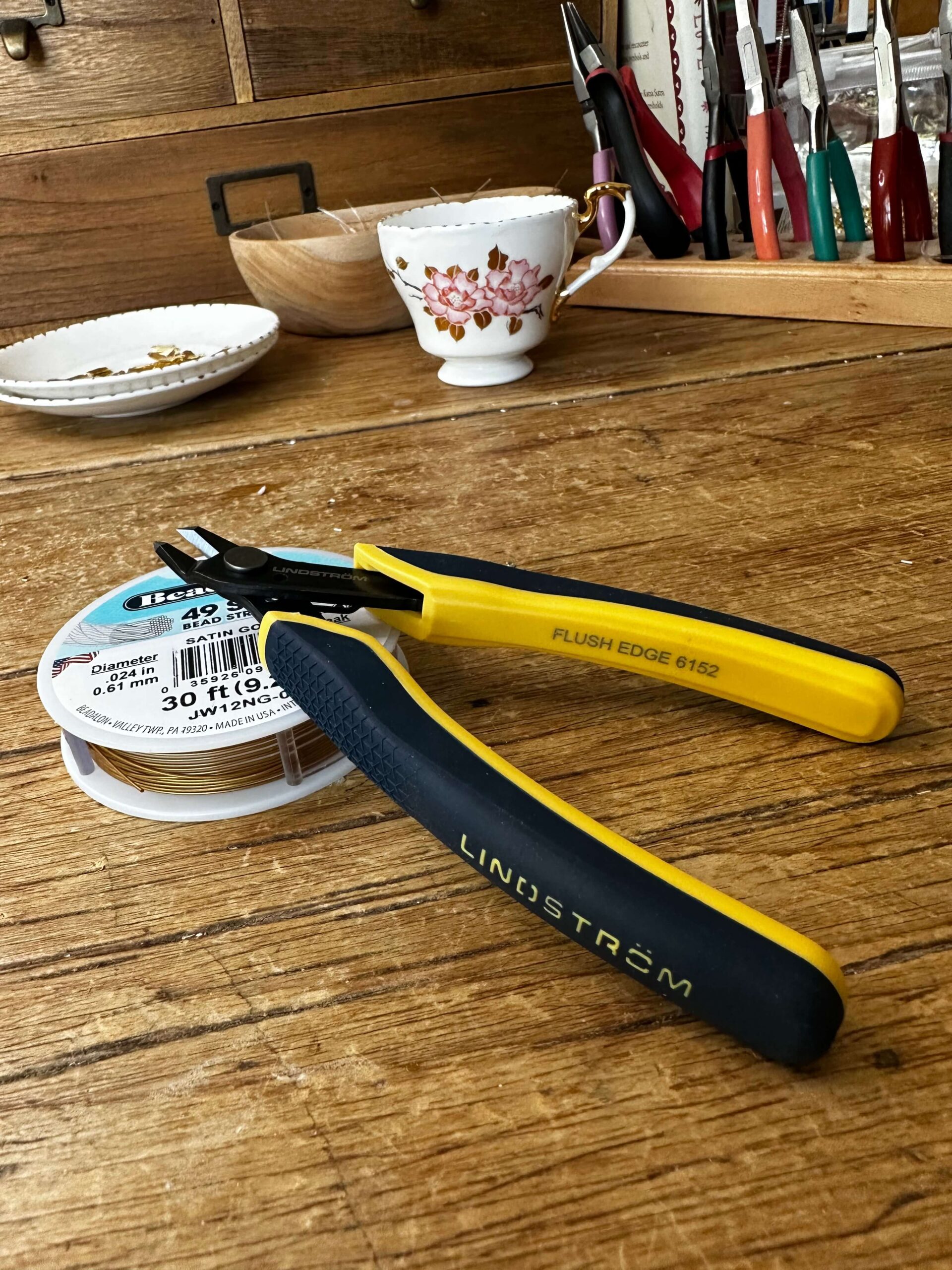
Ok, so… confessions of a jewelry maker.
I bought my very first jewelry cutters from a hardware store!

In my defence, I genuinely thought cutters were just… snippy things that cut wire.
Only later did I discover ‘jewelry specific cutters’ and they had their own tiny engineering universe
– involving words like micro, bevel, tapered, angled, nippers, diagonal, flush.
Who knew!
At the time, I was using giant chunky cutters that were probably more suited to cutting through a bike chain than delicately trimming my headpin. But I thought that was normal 🫣
What I know now is very different. Jewelry cutters genuinely do very different jobs, and the type you use can massively affect how clean, professional and refined your jewelry looks.
So if you’ve ever stared at jewelry cutter descriptions wondering what on earth any of it means… you are absolutely not alone.
Let’s demystify…
Two Things Jewelry Cutter Names Are Usually Describing
Right. THIS is where jewelry cutters become unnecessarily confusing.
Because when you first start looking at proper jewelry tools, the names make it sound like you’re shopping for surgical equipment.
Flush, Tapered, Micro bevel, Diagonal, Shear.
Honestly, it’s a lot.
What took me an embarrassingly long time to realise is that cutter names are usually describing TWO completely different things at once.
Which is why one cutter can somehow be called a ‘Razor-Flush Tapered Cutter‘. Add in cut shapes too ‘Razor-Flush Tapered Shear Cutter‘ and suddenly… your brain leaves the building.
So let’s break this down simply with a few handy visual graphics…
1. The Cut
(What sort of wire end it leaves behind)
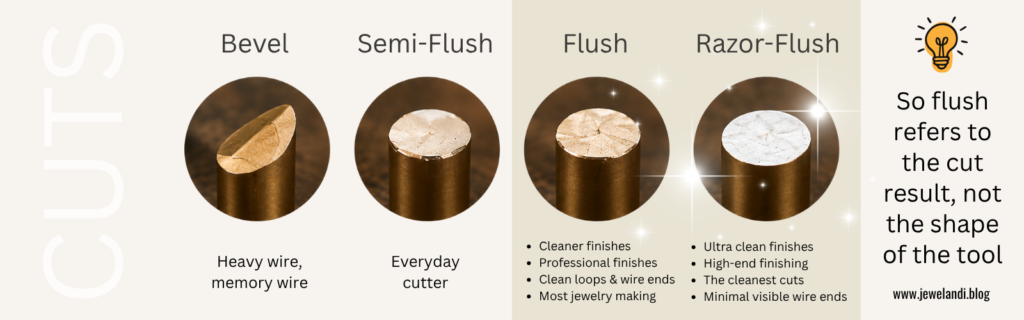
This is why flush or razor-flush cutters are so popular in jewelry making. They leave a much cleaner, closer cut with less visible wire left behind. And razor-flush cutters? Honestly, they cut like butter. The chef’s kiss of jewelry cuts. 😘
Meanwhile bevel cutters tend to leave a sharper end, which is stronger for thick/memory wire… but less pretty for visible jewelry.
2. The Head Shape
(The shape of the tool head itself)
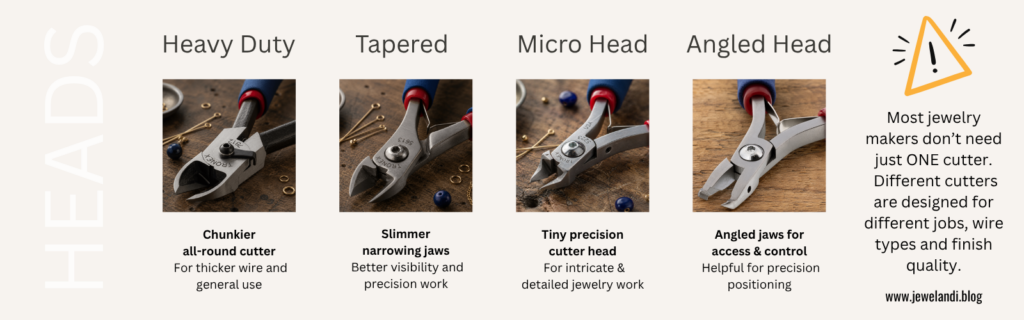
So you see how, chunky cutters can feel a bit like trying to perform bead surgery… wearing oven gloves! Which, coincidentally, is roughly what my first hardware store cutters felt like.
Little Note: Some cutters also offer different cutting shapes, like shear cutting, diagonal cutting, but for most jewelry makers the cut and the head shape are the most important things to understand.
So, What Wire For What Cutter?
| Cutter Type | Best For | Avoid |
|---|
| Bevel | Thick wire, memory wire | Fine precision work |
| Semi Flush | Everyday jewelry wire | Thick/hard wire |
| Flush | Headpins, eyepins, soft-medium wire | Thick/hard wire |
| Razor Flush | Precision finishing | Thick/hard wire |
If you’re looking at upgrading your jewelry cutters, here are a few flush cutters and brands worth exploring, from beginner-friendly options right through to the slightly obsessive.
Tronex Flush Cutter
Lindstrom Tapered Flush Cutter
Smithology Micro Flush Cutter
Beadsmith Flush Cutter
A Super Important Jewelry Maker Warning…
One of the fastest ways to ruin expensive jewelry cutters is using them on the wrong wire.
Most flush and razor flush cutters are designed for:
- soft wires
- findings
- soft metals
NOT:
- memory wire
- steel wire
- thick hardened wire
This is why many jewelry makers actually own:
Because destroying a mighty fine flush cutter on memory wire is a financial pain few recover from! 😮
So, Why Do Expensive Jewelry Cutters Feel So Different?
Ah yes. The question every jewelry maker eventually asks themselves. Because surely cutters are just… cutters? And you now know, that’s what I used to think too. Then one day you try a really good pair and suddenly realise why people get emotionally attached to Lindström cutters.
The difference isn’t usually about whether they can cut wire. Most cutters can technically do that.
The difference is HOW they feel while you’re working.
Premium jewelry cutters often have:
- smoother spring action
- cleaner more precise cuts
- slimmer more comfortable ergonomic handles
- better visibility around your work
- less hand fatigue
- more control for teeny tiny detail
- sharper longer-lasting blades
- they stay aligned
You know when you buy a new really sharp kitchen knife for the first time after years of struggling with a blunt one. It feels amazing doesn’t it!
But, does every jewelry maker NEED $50+ cutters? No not really. Beautiful jewelry can still be made with affordable tools, ok…just maybe not hardware tools!
But if jewelry making is something you do regularly, professionally, or simply love and enjoy a good tool, upgrading your cutters can genuinely make the whole experience more fabulous!
I use the Lindstrom Flush Edge Cutter and it is one I can recommend, it cuts like butter.
Tiny tool upgrades really can make a surprisingly big difference to the finish of your jewelry.
related reads
What Pliers Do Professional Jewelry Makers Use?
5 Details that instantly elevate your jewelry
7-Strand vs 49-Strand Beading Wire
The beading essentials I wish I had on day one