Choosing The Right Elastic Thickness For Your Stretch Bracelets

Match your elastic to your beads for the best results.
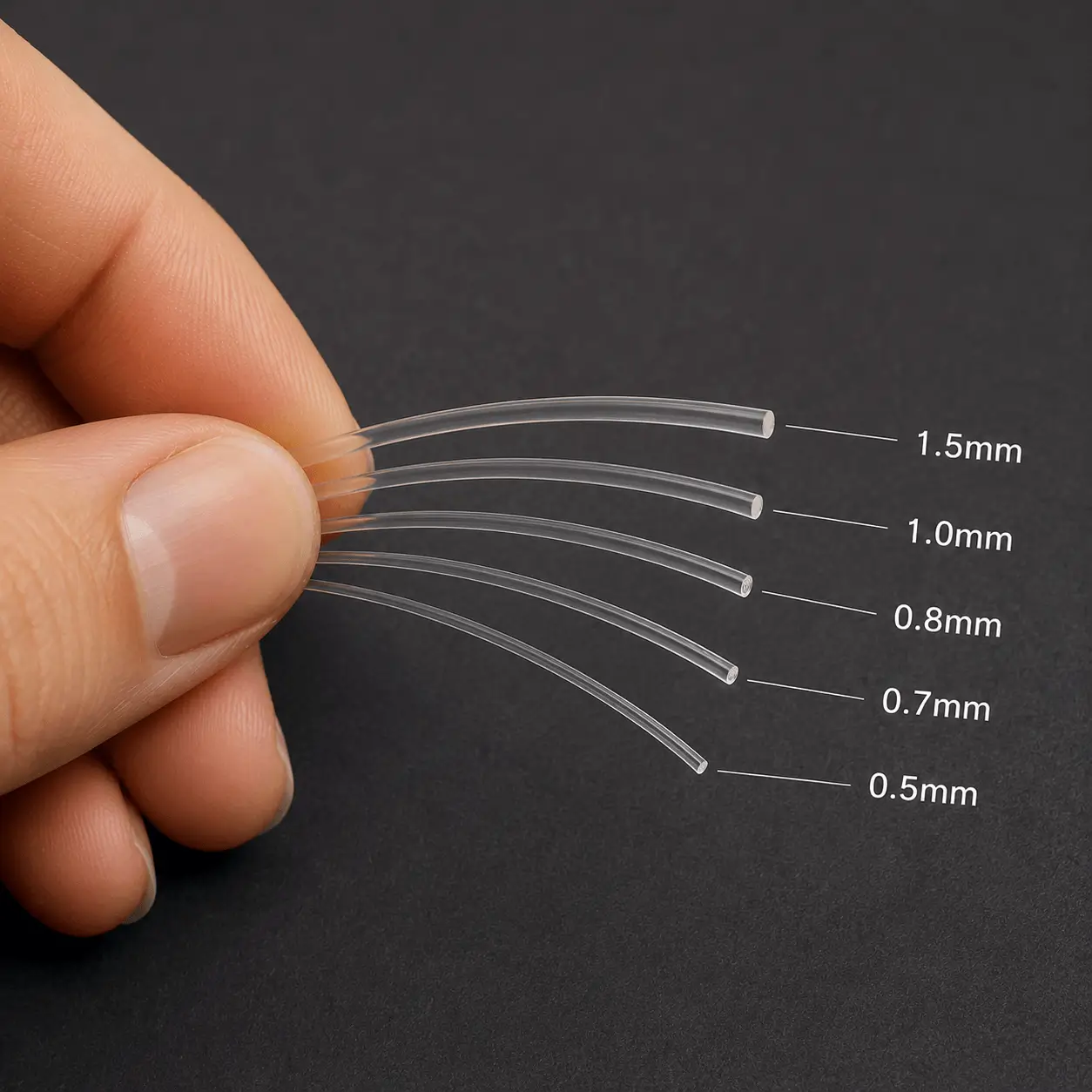
I used to think, If it fits through the bead hole, that’ll do!
I didn’t think for a minute there was a process, a technique, a know-how, or even options!
No? just me? 🤗
Well, twenty years on, I can tell you that’s definitely not quite the case. The best elastic thickness really depends on a few things, and it’s one of the easiest ways to make your stretch bracelets stronger and more professional going forward.
The little things I discovered determine what’s the best thickness for your project is…
1. Bead Hole Size
Some beads have whopping great big holes, while others are teeny tiny. If your elastic is too skinny for the bead hole, it’ll rattle around in there and your bracelet ends up looking a bit wobbly. Not exactly the polished look we’re after here. Getting that ratio right makes all the difference.
Out of everything on this list, this is probably the one I pay the most attention to when deciding on my elastic thickness I’m going to use.
2. Material
Not all beads weigh the same. Natural stone beads can be surprisingly hefty, while glass is usually much lighter, with everything else somewhere in between. If you’re stringing chunky stone beads, don’t expect a skinny bit of elastic to do all the heavy lifting. Choose a thickness that’s up to the job.
3. Bead Size
Size matters!
Bigger isn’t always heavier though. You can have large wooden beads that weigh next to nothing, while smaller gemstone beads can be surprisingly heavy. It’s the combination of size and weight that helps you decide on the right elastic thickness.
Just as a guide, I’ve put together this little chart below that should hopefully make choosing the right elastic a bit easier.
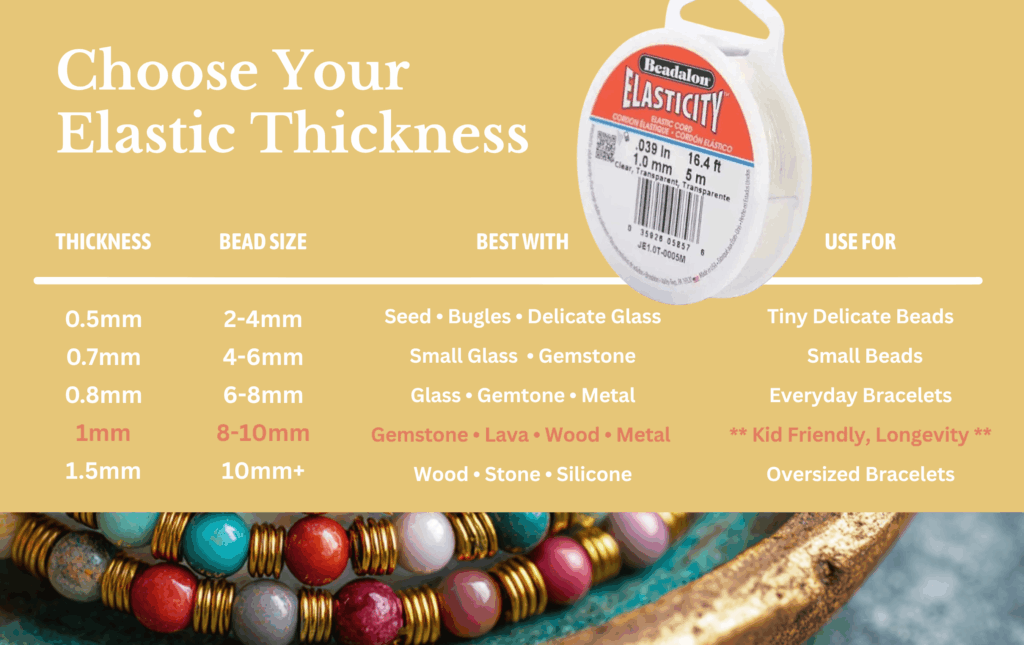
My optimum choice is 1mm. I use 1mm on all my fine metal stretch bracelets, even if the beads are just 4mm and quite lightweight. I want an elastic that gives the bracelet a little more structure and makes it feel more substantial in the hand.
Common Mistakes
- Using 0.5mm because it’s easier to knot.
- Using 1.5mm because ‘thicker must be stronger’.
- Choosing by guesswork.
- Ignoring bead weight.
- Buying poor-quality elastic.
Buying poor-quality elastic
This is probably the biggest mistake of them all. I started out using cheap elastic because, well, it was cheap. It looked fine, stretched fine, and I didn’t know that elastic could vary so much. Then my bracelets started coming back snapped just weeks later.
Big lesson learnt!
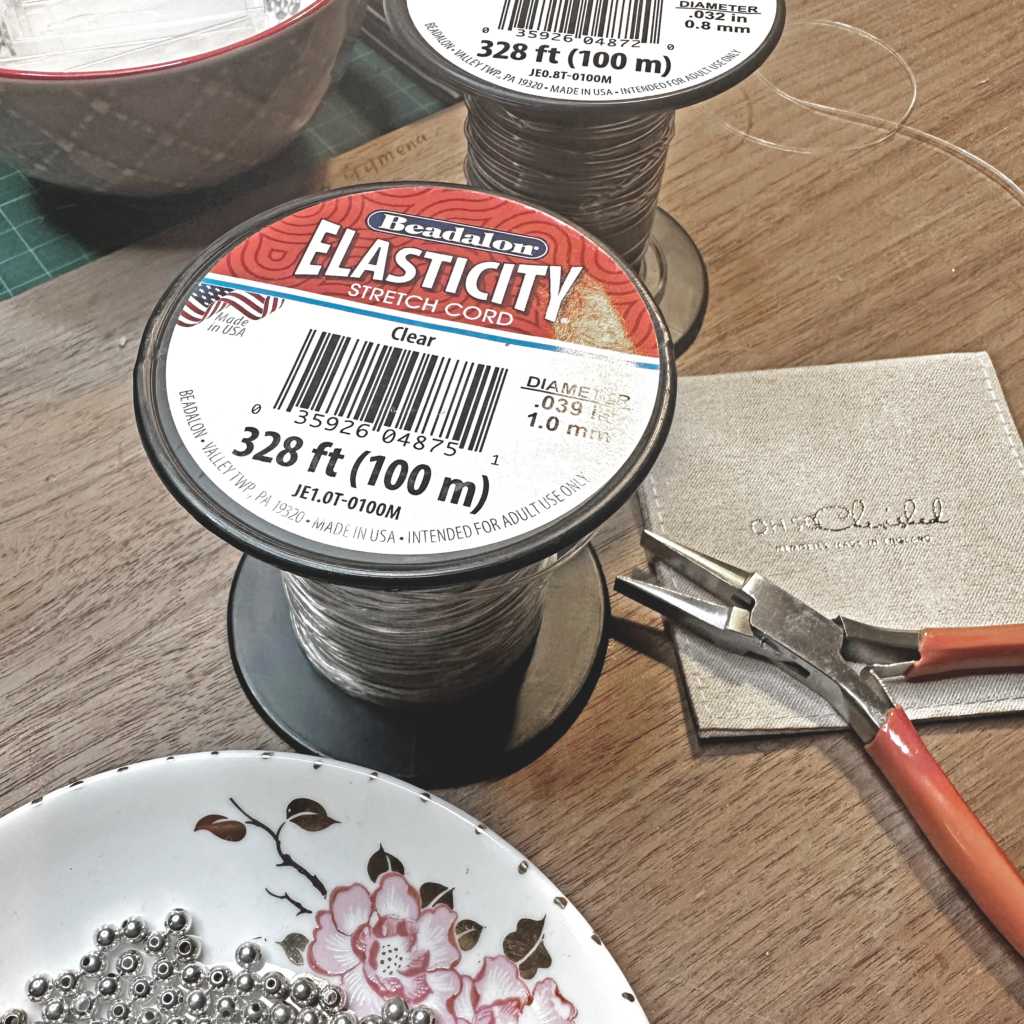
Since then I’ve used Beadalon Elasticity for years, and it very rarely lets me down. When you’ve spent time choosing beautiful beads and making a bracelet you’re proud of, it simply isn’t worth saving a few pennies on the one thing holding it all together right?
Why not give Elasticity a little go with their small 5 metre roll, it might work beautifully for you to.
If you’re anything like me, you’ll get halfway through a bracelet and suddenly think,
Hang on… am I even using the right thickness?
So I’ve answered some of the questions I get asked most often, along with a few I wish I’d known the answers to when I first started making stretch bracelets…
FAQ’s
Can stretch bracelet elastic wear out over time?
Yes. Even high-quality elastic gradually loses its stretch after years of wear. If your bracelet starts feeling loose or doesn’t spring back into shape like it used to, it’s probably time to restring it. Fortunately, replacing the elastic is much cheaper than replacing the beads.
Can I mix different bead sizes on the same elastic?
Absolutely. Just remember that the smallest bead hole determines the maximum elastic thickness you can use. If you’re combining 4mm and 8mm beads, you’ll need an elastic that comfortably passes through the 4mm beads first.
Can sunlight or heat damage stretch bracelet elastic?
Yes. Prolonged exposure to heat and direct sunlight can gradually weaken stretch bracelet elastic over time. Leaving your bracelet on a sunny windowsill, in a hot car, or wearing it regularly in hot tubs and saunas can all shorten its lifespan.
Should the elastic fit tightly inside the bead hole?
Not tightly, but it shouldn’t be swimming around either. Ideally, the elastic should fill the bead hole well while still moving through it smoothly. If there’s too much space around the elastic, the bracelet can look loose and less refined.
Is thicker elastic harder to knot?
Yes, it can be. Thicker elastic is slightly less flexible, so tying neat, secure knots takes a little more practice. Don’t let that put you off though. A stronger bracelet is well worth the extra few seconds.
Can I use the same elastic for bracelets and necklaces?
I personally wouldn’t. Stretch elastic is designed for bracelets that need to expand over your hand. Necklaces are usually better made using beading wire or another non-stretch material for improved durability and shape.
Should beginners buy lots of different elastic sizes?
No. If you’re just starting out, I’d recommend buying 0.8mm and 1mm first. Between those two sizes, you’ll be able to make the vast majority of stretch bracelets without filling your craft drawer with elastic you’ll rarely use.
Why do some stretch bracelets feel floppy?
A floppy bracelet is often caused by elastic that’s too thin for the size and weight of the beads. Choosing a thicker elastic that better fills the bead holes can make the bracelet feel much more substantial and professional.
Once you’ve chosen the right elastic thickness, these are the next five details that instantly make a bracelet look more professional and wow looking…
Why Some Stretch Bracelets Look Professional (And Others Don’t)
Pre-Stretching Your Elastic
How to Stop Your Knot Glue Spreading
Spacer Beads, My Tiny, Shiny Obsession
Tiny Tip: One little secret…shhhh